


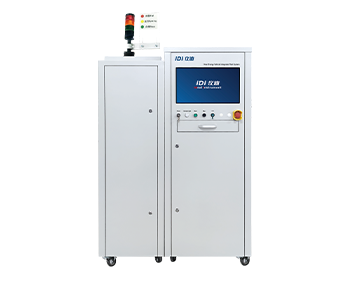
New-energy Vehicle Integrated Test System
- It's used for electrical safety testing of electric vehicles, as well as checking the charging and discharging functions.
- Complies with various international regulations, such as ECE R 100,GTR No.20, GB 18384,IEC61851, IEC 62196.
- It can detect vehicles from various countries, like European-standard cars, American-standard cars, Japanese-standard cars, and Chinese-standard cars.
Equipment Introduction
1、Basic Knowledge of New Energy Vehicle Testing
Potential Equalization Test: Potential equalization is achieved by physically connecting the exposed conductive parts of electrical equipment to a reference point or equipotential point on the vehicle body (usually the chassis) to minimize the potential difference between them. This connection ensures that, in the electrical system, especially in high-voltage systems, the conductive parts maintain the same potential, thereby reducing the risk of electric shock and other safety hazards.
Insulation Resistance Test: The electrification level of new energy vehicles is higher than that of traditional cars. Under harsh operating conditions (car vibrations, external environmental humidity and temperature), or in the event of a collision or rollover, the insulation performance between the high-voltage circuit and the vehicle chassis may be reduced, leading to vehicle fires and endangering the safety of drivers and passengers. The higher working voltage of new energy vehicles places higher demands on the insulation performance between the high-voltage electrical system and the vehicle chassis.
Whole vehicle insulation test: The high-voltage components of electric vehicles are a parallel structure, and the insulation resistance of the entire system is the parallel value of all high-voltage component insulation resistances. According to GB-T 18384-2015 Electric Vehicle Safety Requirements, the minimum insulation resistance requirement: DC 100Ω/V, AC 500Ω/V.
Insulation Monitoring Verification: In high-voltage electrical systems of electric vehicles, if insulation failure occurs, it will pose serious safety hazards. To ensure that the vehicle can promptly send an alarm signal to the driver in case of insulation failure, the vehicle should have an insulation resistance monitoring function.
Capacitive Coupling Test: Capacitive coupling refers to the amount of stored charge on the Y capacitor of the vehicle’s high-voltage bus (all B-level voltage circuits of the vehicle) at the maximum battery voltage.
AC Charging Function Test: The slow charging function detection is to test the slow charging performance of new energy vehicles. The tester charges the new energy vehicle through the slow charging interface, thereby checking the vehicle’s charging status, including connection confirmation during AC charging, readiness for charging, start and charging stages, normal charging completion, PWM duty cycle changes, and current testing.
DC charging function test: The fast charging function detection is to test the fast charging performance of new energy vehicles. The tester charges the new energy vehicle through the fast charging interface to detect the vehicle’s charging status, including self-checking during the DC charging process, charging readiness, charging stage, normal charging completion, and real-time detection of charging parameters (including voltage, current, charging amount, SOC, battery temperature changes, etc.) through CAN communication.
OBC discharge function test:
V2L: The device connects to the vehicle through an integrated power load using a discharge harness (usually connected to the vehicle’s slow charging port), and the vehicle’s battery pack supplies energy to operate the device load, to detect whether the vehicle has the designed discharge function.
V2V: The device simulates the vehicle battery pack charging process, using a wiring harness connected to the tested vehicle (usually connected to the vehicle’s slow charging port). The tested vehicle discharges, and the device simulates the vehicle battery pack receiving energy to verify whether the vehicle has the designed discharging function.
2、Workstation layout:
The comprehensive testing system covers a wide range of test items, usually arranged at the vehicle’s complete assembly station, rain test station, repair area test station, etc., where the vehicle is fully assembled and the pace requirements are not high.
3、New Energy Testing Project Selection
Test item |
Parameters |
Component potential balancing |
32A DC/600mΩ |
Charging port potential balancing | |
Insulation Resistance of Load |
1000V DC/10GΩ (optional 50GΩ) |
Charging port insulation resistance | |
Leakage current |
300.0V AC/18mA |
Complete vehicle insulation |
0.2-100MΩ |
Insulation Monitoring Verification |
Resistivity coefficient Rx: 100-1000; |
Capacitive coupling |
1、Calculation method (recommended); 2、Actual measurement (long testing time, not recommended); 1000V DC/2000mJ; |
Communication charging function |
Single-phase 7KW; three-phase 22KW optional; 300.0V AC/32A; |
DC charging function |
30KW; 1000.0V DC; |
OBC Discharge Function V2L |
7KW adjustable; 300VAC/32A |
OBC Discharge Function V2V |
The above testing project manufacturers can consider the actual needs, production rhythm, etc., for station layout. Yidi testing system can flexibly combine the above testing projects.

